We’ve been following the Teamsters’ response to UPS and the Driver Choice Program for a while. The IBT called it illegal, ran to federal court, and lost. Then the parties reached a settlement, which we covered here. O’Brien called it a strong outcome. Seniority would govern. Member rights would be protected.
The unrest didn’t stop. It seems to be getting worse.
Drivers are reporting unexpected denials. Allegations of favoritism are circulating in Teamsters Facebook groups. And the gap between what members were told the settlement means and what the DCP plan document says is getting harder to ignore.
What Members Were Told
O’Brien’s April 5 announcement was clear. Total buyouts capped at 7,500. Selections based on seniority. The Central Region is back in the program. “Union seniority and the rights of all our members will be honored.”
Members reasonably concluded that seniority was the deciding factor. Apply, rank high enough, get approved.
That’s not what the document says.
What the Document Says
The UPS Workforce Transition Governance Committee retains “absolute discretion to determine the eligibility of each person.” Applications are evaluated “according to the local needs of the business.” Seniority breaks ties within a specific facility, after UPS has already decided how many people that building can afford to lose.
A driver with 25 years can be denied at a facility UPS needs to keep staffed. UPS confirmed this in its own April 5 statement: “Applications will be approved based on seniority and the needs of the business, as originally planned.”
As originally planned. Management discretion wasn’t removed. It was repackaged.
What Members Are Experiencing
High-seniority drivers are being denied at facilities UPS needs to staff. The “needs of the business” provision is doing exactly what it was written to do. The problem is that members expected something different, and many still don’t know where they stand.
A $150,000 decision. A union that told them to hold the line. A settlement was announced as a victory. And now denial letters are arriving with no clear explanation of why seniority didn’t protect them the way they were told it would. Nobody at the local level has a clean answer. Nobody at the international level is clarifying. The document that would settle the question hasn’t been released.
That’s creating a trust problem for the union.
The Question Members Are Already Asking
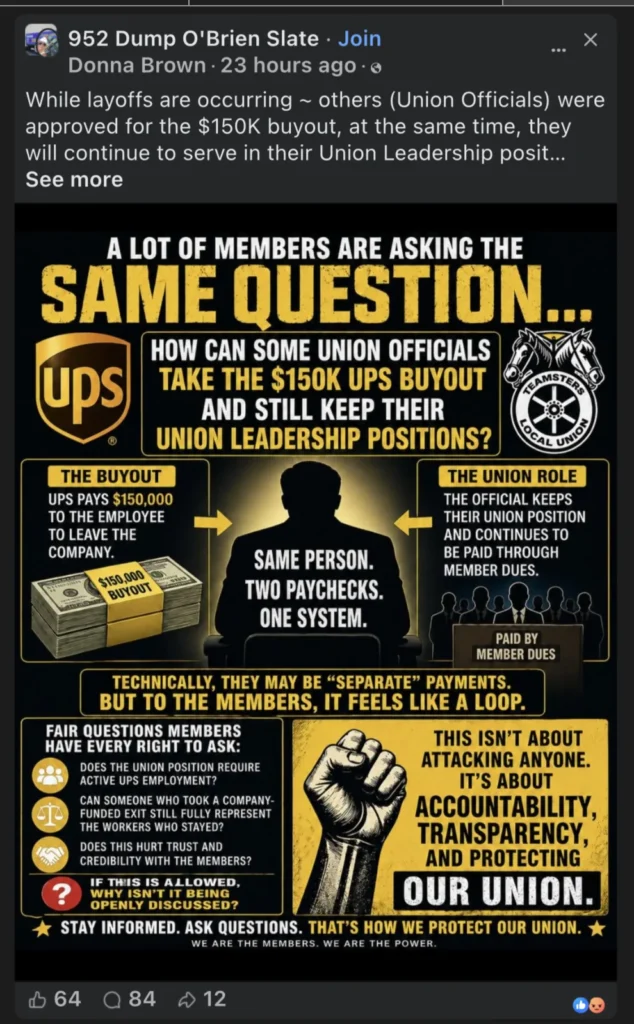
Thirty-seven Central Region locals broke with O’Brien in March. That fracture was papered over on April 5. It wasn’t healed.
Graphics are now circulating in Teamsters Facebook groups, making allegations that local officials took the buyout while staying on the IBT payroll. One, attributed to members of Teamsters Local 270 in New Orleans, names the southern region president and his secretary directly. The question being asked: “What do they know that we don’t?”
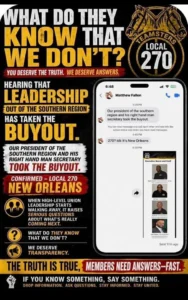
It’s not the only question circulating. Under the NMA’s Article 16, IBT officers and business agents on union leave of absence retain their UPS seniority without loss for the duration of their union service. The plan document defines seniority by reference to the applicable supplement and does not explicitly exclude employees on union leave from eligibility. Which raises a question members in several locals are now asking directly: do IBT officers out on leave get these buyouts over working drivers?
Nobody has answered that publicly. The settlement agreement has not been released. But high-seniority active drivers are being denied, while that question goes unanswered. That combination fuels the allegations circulating in those groups.
Members are naming names. In public. Six weeks before the IBT’s 31st International Convention opens in Las Vegas, in a year when the general president ballot goes out in October. Because they don’t trust what they were told.
What Employers Should Be Watching
Drivers are making $150,000 decisions without a clear picture of the rules. That’s the real cost of overselling a settlement. When union leadership needs a win more than it needs an accurate win, members pay for the gap in real money, in missed opportunity, and in trust they won’t get back.
The plan document was public. The language was plain. What O’Brien announced and what UPS retained are both in writing. One showed up in the press release. The other is showing up in denial letters.