There’s a layer between “figure it out yourself” and “call the attorney” that most mid-market companies don’t have.
Fortune 500 companies have it. It’s called a labor relations department. It handles the 95% of union issues that are operational—not legal. Contract interpretation. Grievance strategy.
Documentation guidance. Supervisor coaching.
When a Fortune 500 manager has a question, she asks. Zero hesitation. Zero billable hours. Issue stays small.
When you have a question, you calculate. Is this worth a call? Can I figure it out? How bad could it get? And problems compound while you decide.
We benchmarked over 150 unionized mid-market companies to measure exactly what that missing layer costs—and what it takes to build it.
The Mid-Market Reality
Large companies don’t have smarter managers. They have better infrastructure.
When a Fortune 500 supervisor has a contract question at 7am, she doesn’t weigh whether it’s “worth a call.” She picks up the phone, calls the internal labor relations department, gets guidance in 10 minutes, and moves on with her day. Issue stays small. Zero hesitation.
That labor relations department handles the 95% of issues that are operational—not legal. The attorneys handle the 5% that actually require a law degree: NLRB charges, complex arbitrations, litigation.
Most mid-market companies don’t have that middle layer. Everything either goes to expensive attorneys (and you hesitate because of cost) or nowhere at all (and problems compound).
But here’s the question most company leaders can’t answer: How big is your gap with the Fortune 500? How do your labor relations metrics actually compare to similar mid-market companies?
Why Measuring Labor Relations Effectiveness Matters
The Cost of Not Knowing
When you don’t measure LR effectiveness, three things happen:
- Problems stay invisible until they explode. A grievance backlog doesn’t feel urgent—until you’re facing five arbitrations simultaneously. High attorney fees seem normal—until you realize you’re paying twice what peers pay.
- You can’t make the case for resources. “We need more supervisor training” is a weak argument. “We’re in the bottom quartile for Step 1 resolution, which is costing us $40K in unnecessary escalations” gets budget approved.
- You miss opportunities to get ahead. Top-performing companies don’t just avoid problems—they build competitive advantage through better union relationships, lower costs, and fewer operational disruptions.
In almost every other business function, leaders have benchmarks. Sales knows their close rate vs. industry average. Operations tracks productivity against competitors. Finance monitors margins against peers.
But labor relations? Most companies are flying blind.
The Four Metrics That Matter Most
Our benchmarks identify four metrics that reliably distinguish top performers from struggling operations. These aren’t arbitrary—they’re the indicators that correlate most strongly with overall operational health, cost efficiency, and long-term stability.
1. Grievance Rate (per 100 employees)
Why it matters: High grievance rates indicate systemic issues—inconsistent policy application, undertrained supervisors, or a breakdown in the working relationship. Each grievance consumes management time and can escalate into costly arbitrations.
2. Step 1 Resolution Rate
Why it matters: Every step a grievance advances costs more. Step 1 involves frontline supervisors. By Step 3+, you’re pulling in HR directors and union business agents, and you’re probably getting legal involved. High Step 1 resolution means supervisors are trained, empowered, and have productive steward relationships.
3. Arbitration Volume
Why it matters: Arbitrations are expensive—typically $15,000-$40,000 each including attorney fees, arbitrator fees, and management time. Outcomes are unpredictable; even strong cases can be lost. High arbitration volume signals either poor grievance handling or a fundamentally adversarial union relationship.
The math: 4 arbitrations/year at $25K each = $100K. Reducing to 1 saves $75K annually.
4. Legal Fee Percentage
Why it matters: Attorneys are essential for NLRB charges, complex arbitrations, and legal advice. But day-to-day operational questions—”Can we move this employee?” or “Does this violate this clause?”—shouldn’t require $800/hour legal advice.
What Your Personalized Benchmark Report Includes
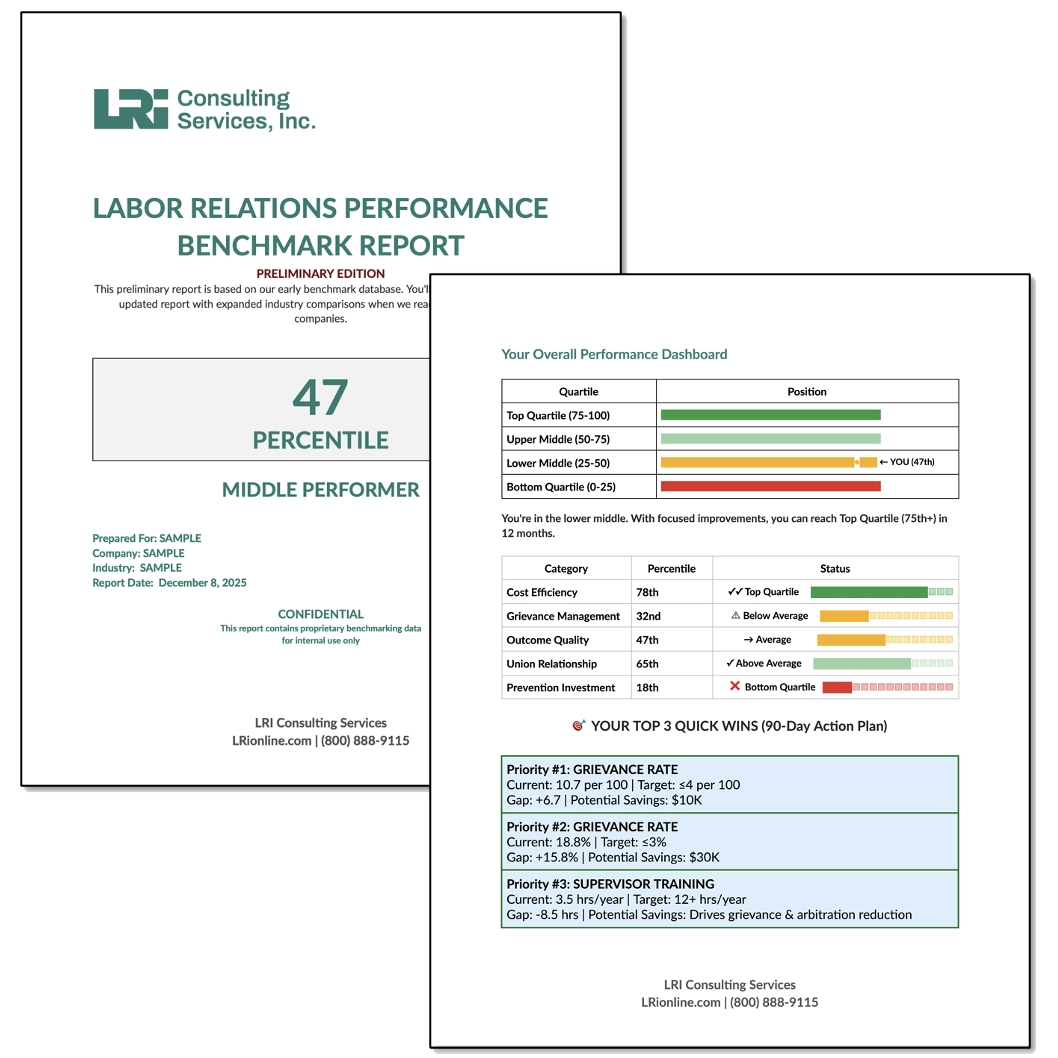
When you complete our 9-question assessment, you receive a comprehensive 7-page benchmark report customized to your organization:
- Overall Performance Score — Your percentile ranking among 138+ unionized companies
- Five-Category Dashboard — Cost Efficiency, Grievance Management, Outcome Quality, Union Relationship, and Prevention Investment
- Top 3 Quick Wins — Highest-impact improvements for the next 90 days with estimated savings
- Detailed Benchmarks — Your metrics vs. database averages and best-practice targets
- Cost Savings Analysis — Where the money is going and where you could save
- Three-Year ROI Projection — Investment analysis with cumulative returns
The 9 Questions
The assessment takes about 5 minutes. Nine multiple-choice questions covering grievance volume, resolution rates, arbitration history, spending, and union relationship quality. All questions use ranges—estimates work perfectly. Your best guess still produces useful insights.
Closing the Gap
The infrastructure gap stays invisible because you have nothing to compare against. You don’t know if your grievance rate is high—because you’ve never benchmarked it. You don’t know what that missing layer is costing you—because the losses are scattered across attorney bills, management time, and settlements that feel “normal.”
The benchmark report makes the gap visible. Five minutes, nine questions, and you’ll know exactly where you stand—and exactly what Fortune 500 infrastructure could save you.
Get Your Personalized Benchmark Report
5 minutes. 9 questions. Instant results.
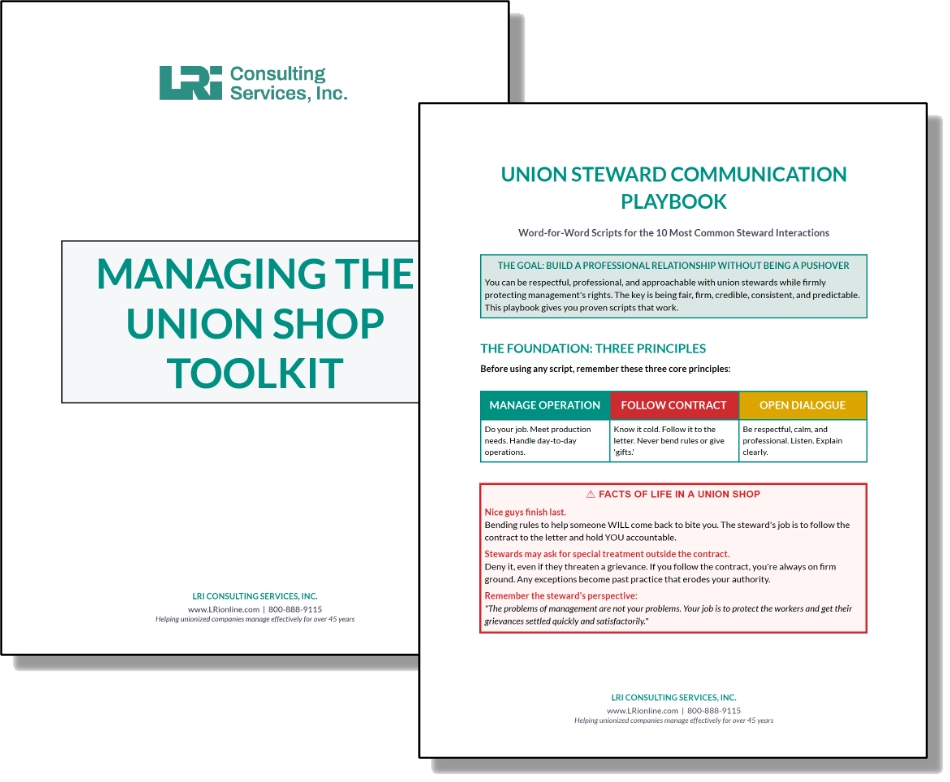
Plus, you’ll get the Managing the Union Shop Toolkit free—the same operational tools Fortune 500 LR departments use daily.
Want the PDF version of this to share with your team?
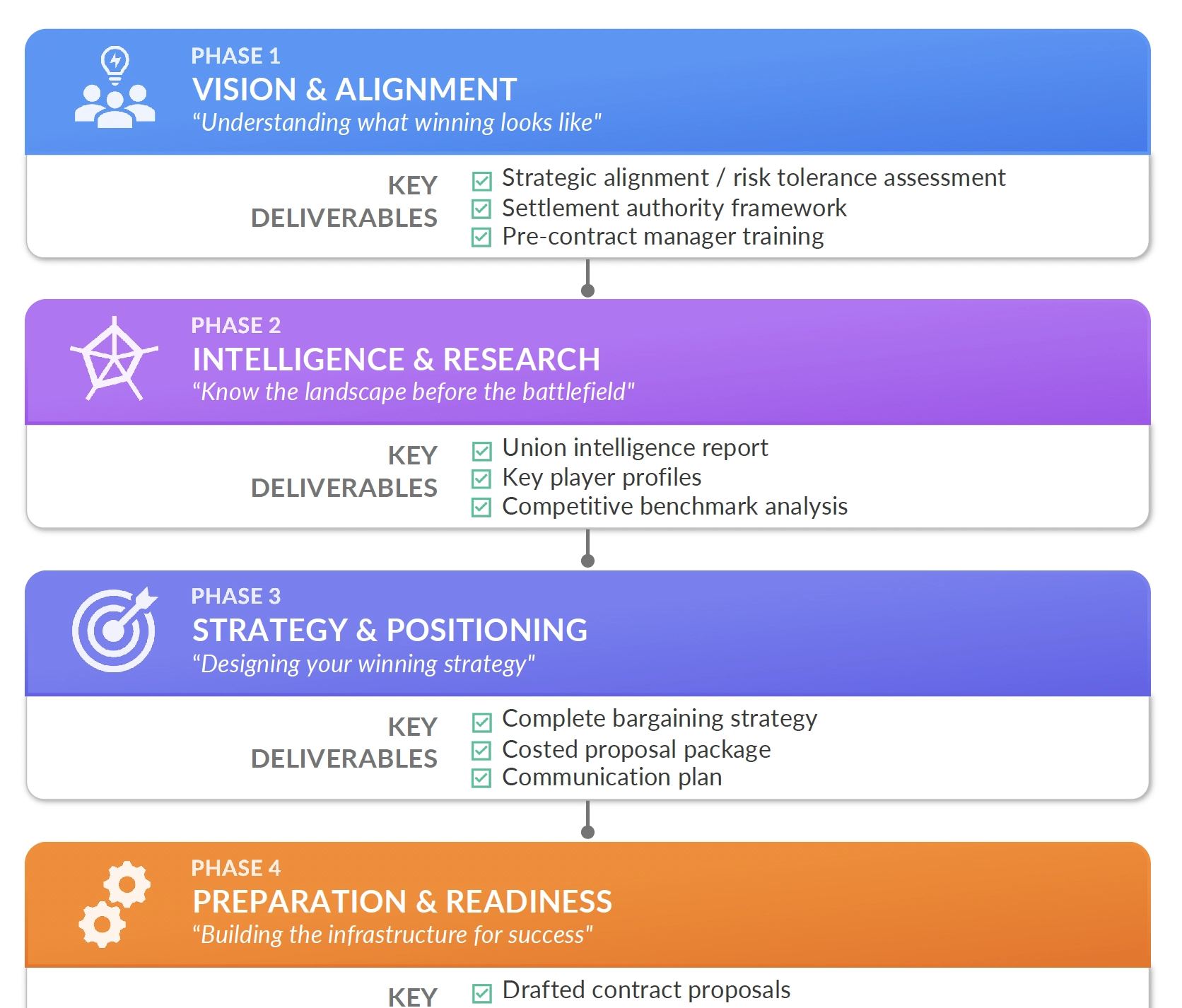
Tell us where to send the report PLUS get our Managing the Union Shop Toolkit and Bargaining BlueprintTM
Questions? Call us at (800) 888-9115 or email be*******@*******ne.com